
The regular appearance of premium skincare, fragrance, and fitness brands in high-end hotels isn’t accidental. Hospitality has become a structured brand-discovery channel, supported by suppliers such as Hunter Amenities, which offers hotel collections from Le Labo, and Vanity Group, whose portfolio includes Grown Alchemist. These partnerships place products where guests have a practical reason to use them.
For international health and wellness brands, hotel amenity partnerships in Japan can create product trial, awareness, B2B revenue, and consumer demand without requiring an immediate nationwide retail rollout. They can also support direct-to-consumer operations through a physical experience digital marketing cannot reproduce.
Hospitality is not a shortcut around localization, regulation, or distribution. Brands still need Japanese-language materials, reliable supply, and a way to continue the customer relationship after checkout, so the strongest strategies connect the right property and product with a clear path to further discovery or purchase.
Japan’s tourism growth is creating the audience
According to the Japan National Tourism Organization, Japan received approximately 42.7 million international visitors in 2025, up 15.8 percent from 2024 and the highest annual total recorded. The Japan Tourism Agency’s inbound spending figures also showed record travel spending of ¥9.45 trillion, with average spending of approximately ¥229,000 per visitor.
A 2025 JNTO study of Japan’s high-value inbound market estimated that 590,000 travelers spending at least ¥1 million per person visited Japan in 2023. Although they represented only 2.4 percent of visitors, they accounted for ¥1 trillion, or 19.1 percent, of total inbound spending.
The opportunity also includes domestic travel. Japan Tourism Agency data showed that Japanese residents spent approximately ¥26.8 trillion on domestic travel in 2025, including ¥21.7 trillion on overnight trips, giving premium hotels, ryokans, resorts, and regional retreats access to affluent domestic and international guests.
Investment is following this demand. In its February 2025 report on Japan’s hospitality sector, Savills reported that hotel investment reached a preliminary record of ¥1.1 trillion in 2024 and noted a substantial pipeline of international luxury properties.
The Global Wellness Economy Monitor 2024 valued wellness tourism at approximately US$830 billion in 2023. As hotels emphasize sleep, recovery, fitness, personal care, nutrition, and relaxation, accommodation is increasingly part of the wellness experience.
Why amenity placement works differently
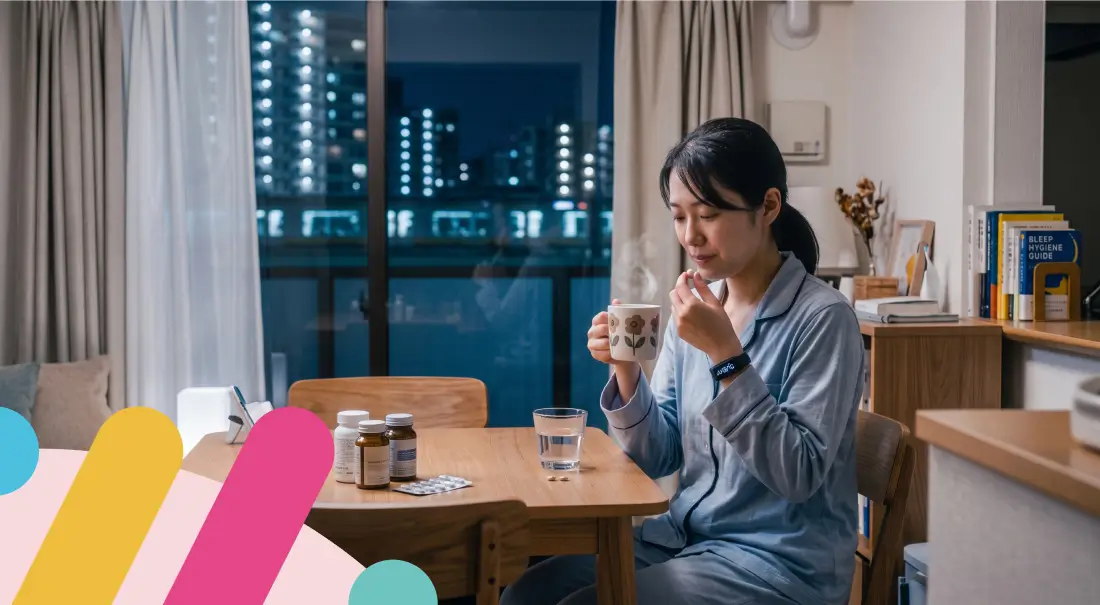
Digital advertising often introduces a wellness product while the consumer is distracted or comparing alternatives. Hospitality changes that context because guests may use a shampoo, body treatment, sleep product, fragrance, or piece of fitness equipment several times during a stay and experience its performance directly.
A hotel can therefore act as an extended trial environment, while the property’s reputation adds credibility. An unfamiliar brand selected by a respected hotel, ryokan, spa, or resort appears to have passed a professional evaluation, helping it build trust in Japan.
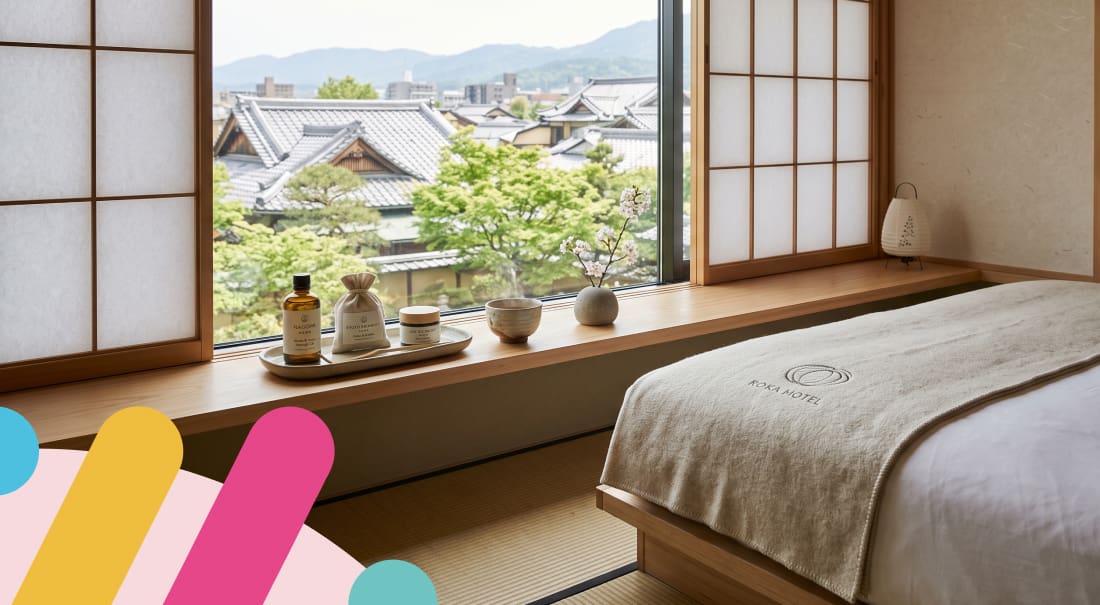
The fit still needs to be natural. Skincare may suit a ryokan, onsen resort, or nature-led boutique hotel, while recovery products may align better with a ski resort, urban business hotel, or destination spa. Fitness equipment can become part of the property’s design and guest experience rather than only a functional purchase.
Hospitality should therefore be viewed as a business-to-business-to-consumer, or B2B2C, channel. The hotel is the immediate customer, but longer-term value depends on what happens after guests discover the brand.
What established brands are doing in Japan
Several Western brands show how hospitality partnerships can work at different levels of integration.
L’Occitane: from amenity to branded experience
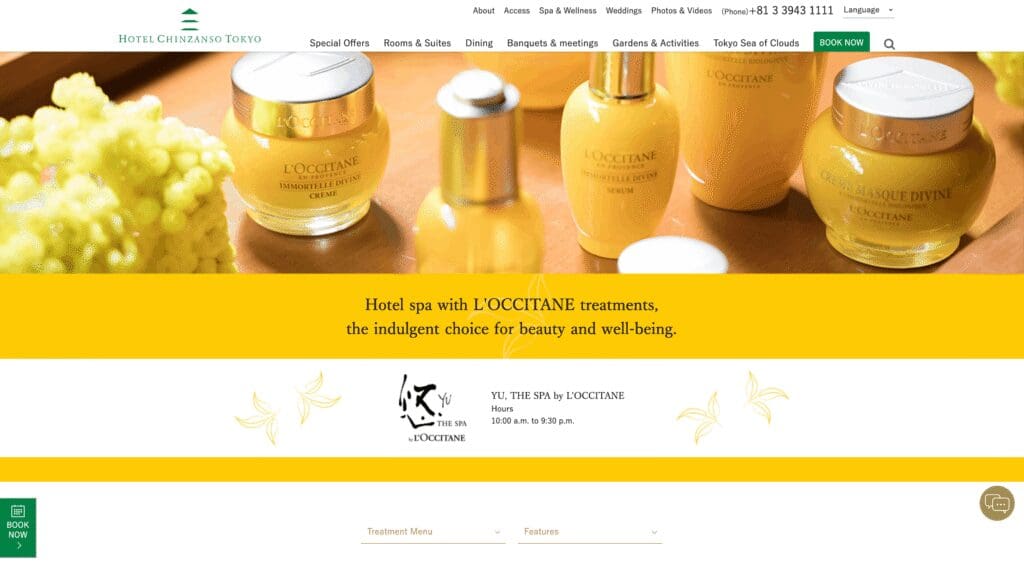
Hotel Chinzanso Tokyo includes L’Occitane Citrus Verbena products among its guest-room amenities and operates YU, THE SPA by L’Occitane, combining routine product use with a deeper treatment experience. L’Occitane’s hospitality website also presents miniatures, dispensers, refills, gift sets, and spa services for hotel buyers, showing how in-room trials can lead to treatments, retail, and follow-up content.
Molton Brown: selective prestige
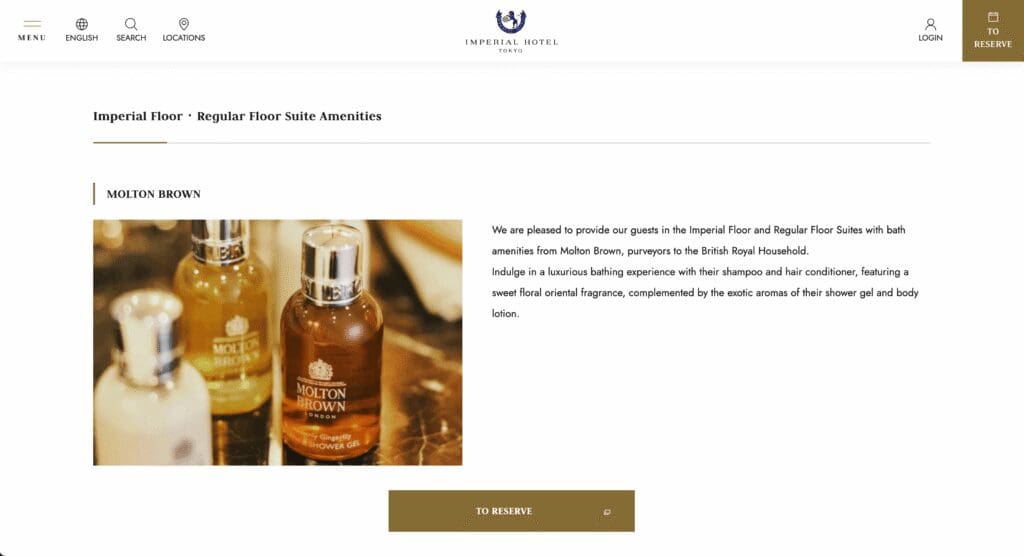
The Imperial Hotel Tokyo’s guest-room amenity information identifies Molton Brown products on its Imperial Floors and in selected suites. This associates the British brand with a leading luxury hotel while preserving exclusivity, and a premium-room pilot can reduce initial volumes before wider expansion. Molton Brown’s hotel amenities section makes the B2B offer clear.
Bamford: alignment with Japanese luxury
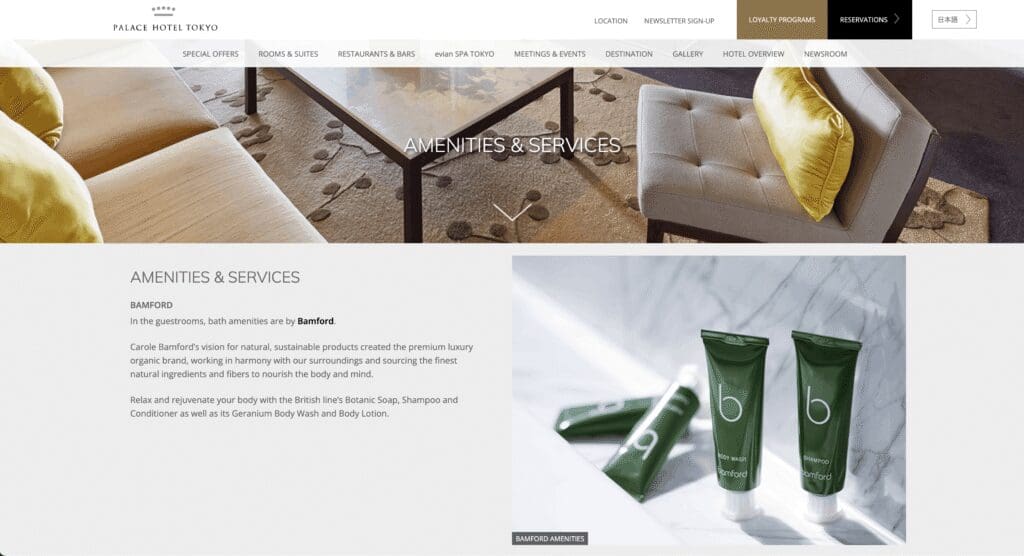
Palace Hotel Tokyo provides Bamford products among its guest-room amenities, while Bamford Japan’s hotel and spa information identifies Palace Hotel Tokyo, Asaba, The Okura Tokyo, Fusaki Beach Resort, and other luxury partners. Its Japanese corporate and wholesale inquiry page also gives business customers a direct route to request information.
Guerlain: exclusivity through suites
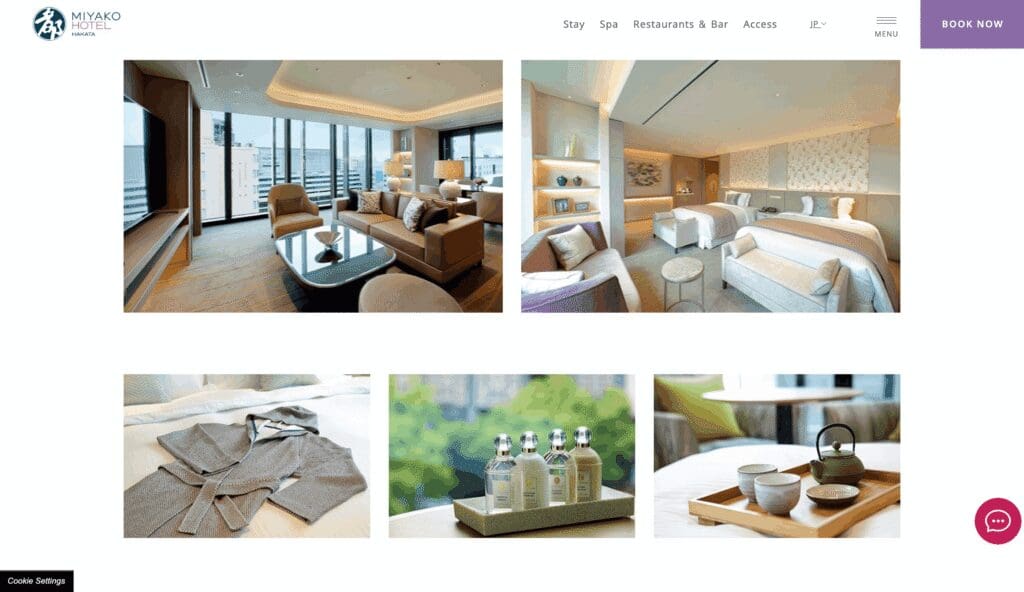
The Capitol Hotel Tokyu includes Guerlain products among its suite hospitality features, while Miyako Hotel Hakata provides them in The Terrace Suite. In both cases, the products distinguish a premium accommodation tier while protecting the brand’s prestige.
Technogym: the property and real-estate model
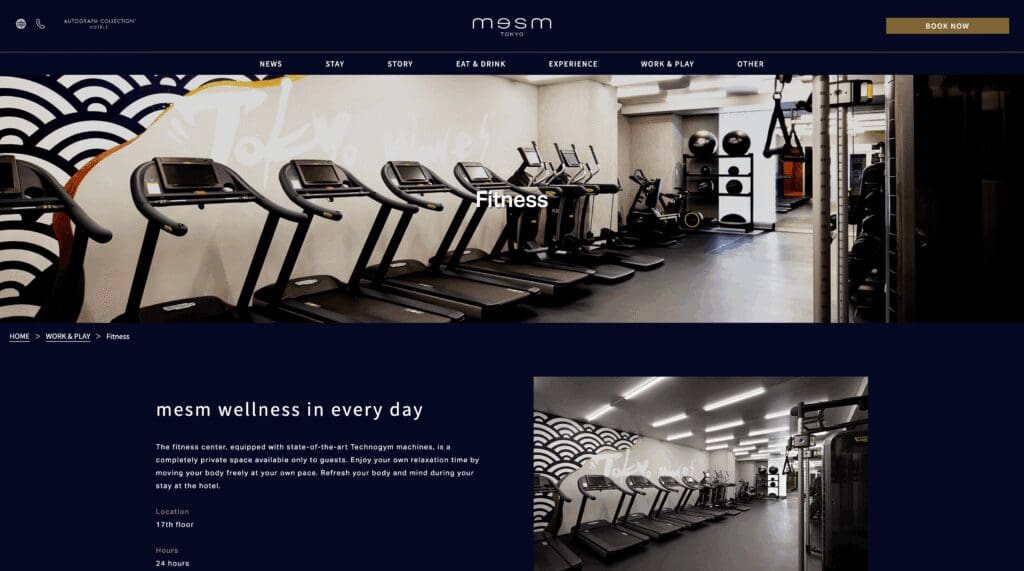
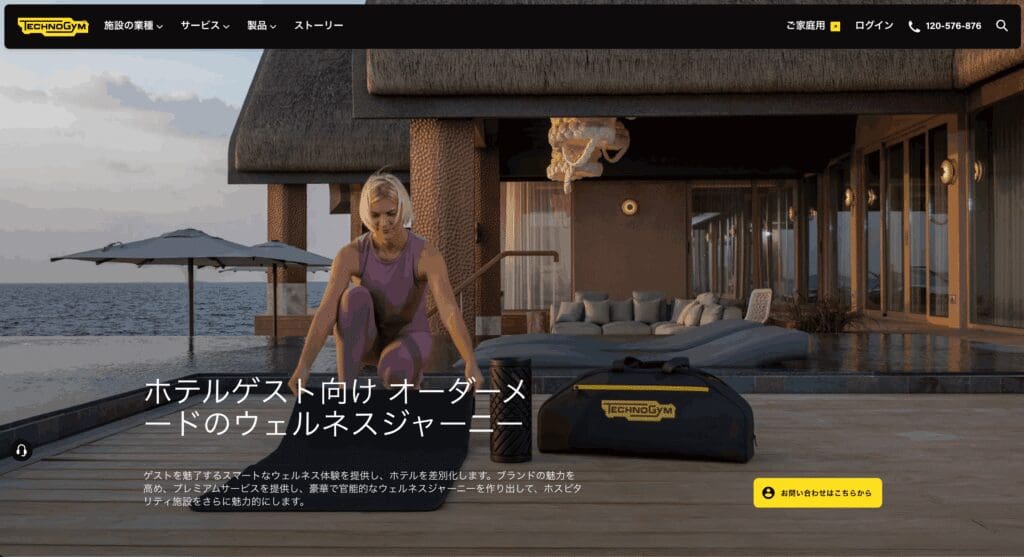
Mesm Tokyo operates a guest-only fitness center equipped with Technogym machines, while The Prince Sakura Tower Tokyo says its fitness facility includes more than 25 types of Technogym equipment. Technogym’s hotel and spa solutions also cover spatial planning, interior design, staff education, marketing support, and servicing. Similar property-led models may suit recovery technology, sleep systems, air-quality products, lighting, and other built-in wellness categories.
Three routes to a hospitality partnership
Direct outreach
The direct route involves identifying hotels, resort groups, ryokans, serviced residences, and premium vacation properties that fit the brand. Outreach should explain why the product suits the property’s guests, design, wellness program, or sustainability goals while addressing operational requirements.
The initial B2B package should cover:
- Japanese-language product information, formats, and uses
- Minimum quantities, lead times, pricing, and replenishment
- Sustainability, testing, regulatory, and labeling information
- A named local contact and support process
Samples should form part of a commercial proposal because hotel teams need to know whether the product can perform consistently across many stays. Direct sales offer greater control, but they require local account management, dependable logistics, and patience.
Distributor or broker partnerships
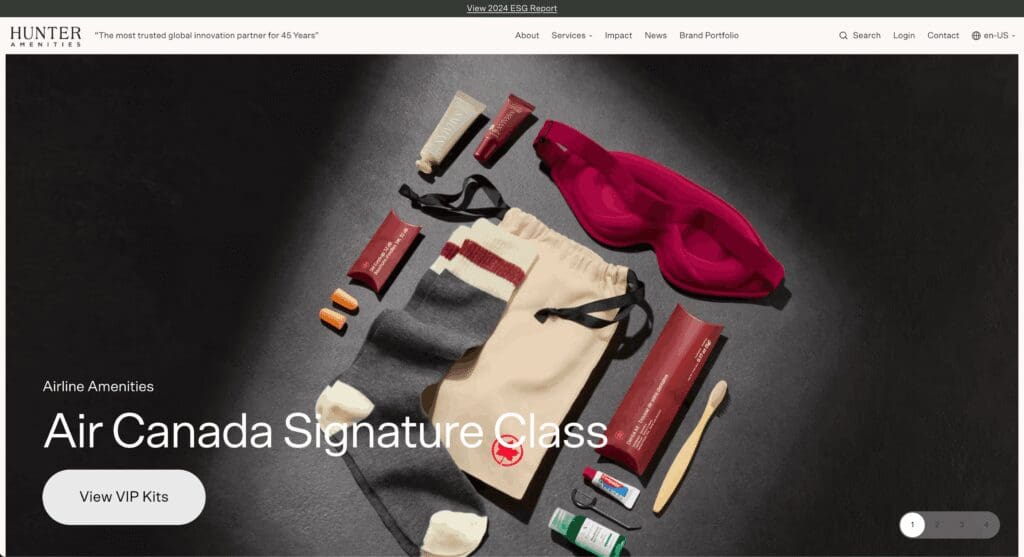
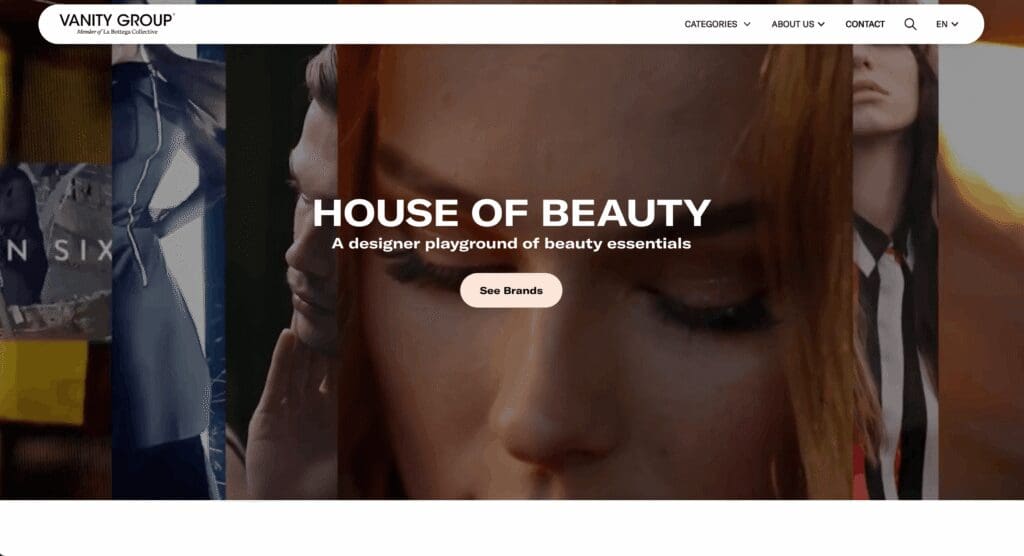
Hunter Amenities offers more than 45 licensed brands and provides formulation, manufacturing, packaging, private labeling, and distribution. Vanity Group states that it supplies thousands of hotels across 90 countries and develops customized collections.
A distributor can provide procurement access, established formats, refill systems, packaging expertise, and supply infrastructure. Brands should still assess margin layers, minimum volumes, portfolio competition, and Japan-specific support, while agreements should define territory, exclusivity, relationship ownership, marketing support, data access, and regulatory responsibility.
Localized inbound capture
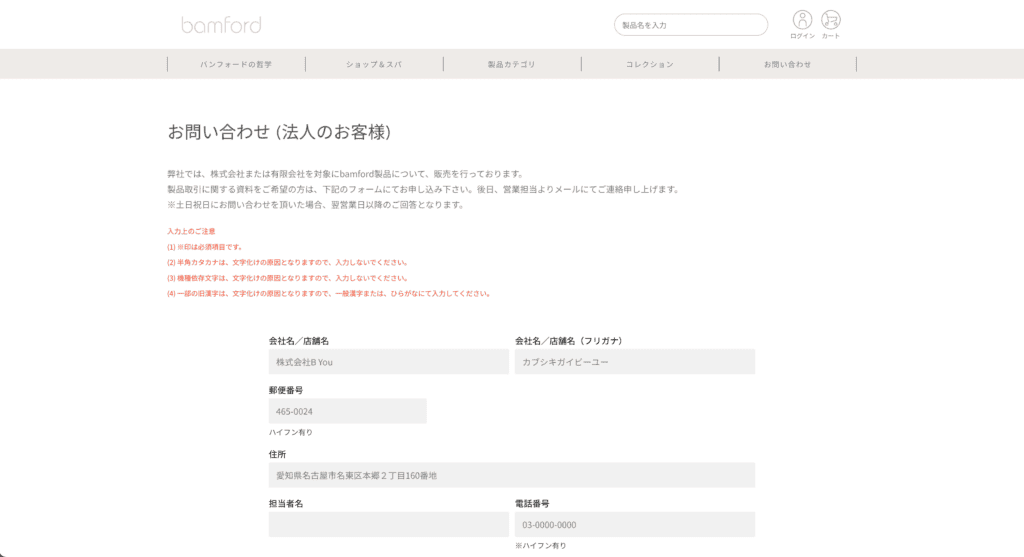
Hotel managers may discover a brand through search, trade events, recommendations, press coverage, or another property, so a localized B2B page should explain partnership models, product formats, refill options, customization, supply coverage, operational support, and common procurement questions. It should also include verified examples, a short Japanese inquiry form, response times, and local contact details.
The commercial pathways offered by L’Occitane Hospitality, Molton Brown Hotel Amenities, Bamford Japan, Technogym, Hunter Amenities, and Vanity Group show how B2B information can be separated from the consumer journey.
Building direct-to-consumer demand after checkout
A hotel placement creates awareness, but its commercial value is limited if guests cannot identify or buy the product later. A QR code or NFC tag can lead to a localized mobile page explaining the product, routine, brand story, and purchase options in Japanese and English. Co-branded sample redemptions or ecommerce offers can also help, although loyalty programs and guest data require clear consent.
An “experienced at” collection can direct guests to a relevant page rather than a generic homepage, while search, content, paid social, and retargeting can reinforce the hotel experience. Ecommerce must also meet Japanese expectations through clear delivery information, familiar payment options, understandable instructions, responsive support, and straightforward returns.
Useful performance indicators include:
- QR visits, product-page engagement, and sample redemptions
- Email opt-ins, first purchases, and repeat purchases
- Branded search growth and revenue linked to each property
Making the model work in Japan
Hotels require dependable inventory, predictable lead times, clear documentation, responsive Japanese communication, practical packaging, staff guidance, and an escalation process. A product will struggle to expand if it creates problems for housekeeping, storage, or replenishment.
Japan’s Plastic Resource Circulation Act, which came into force in April 2022, created new expectations around plastic products distributed by hotels and other service businesses. Refillable dispensers, lighter packaging, recyclable materials, and fewer single-use formats are therefore commercial as well as environmental considerations.
JETRO’s guidance on importing cosmetics into Japan explains that cosmetics require appropriate import, licensing, labeling, and quality procedures under the Pharmaceuticals and Medical Devices Act — explained in detail in this guide to Japan’s Pharmaceutical Affairs Law for cosmetic brands. The digital journey must also comply with Japan’s Act on the Protection of Personal Information, so QR codes, loyalty offers, email capture, and retargeting require transparent notices and valid consent.
Above all, localization must extend beyond translation. Product claims, imagery, instructions, sales materials, customer service, and the value proposition should make sense in Japan, while the proposal should reflect the property’s reputation and operating standards.
A different route into Japan
Hotel amenity partnerships allow wellness brands to enter trusted settings, create meaningful product trials, and reach high-spending domestic and international travelers. The approach can require less upfront investment than physical retail, but it still depends on the right property, reliable local operations, regulatory preparation, and a digital journey that continues after checkout.
Brands that treat amenities as sample distribution may gain temporary exposure, while those that approach hospitality as an integrated B2B2C channel can build awareness, sales, market knowledge, and longer-term brand equity.
Pulse Marketing supports international health and wellness brands with Japan market-entry strategy, localized B2B landing pages, search and performance marketing, ecommerce optimization, and post-experience customer journeys. Brands considering a hotel, ryokan, spa, or resort partnership can contact Pulse Marketing to discuss how physical partnerships and digital growth can work together in Japan.