
Introduction: Cleanliness as an Invisible Health System
Globally, conversations about health innovation tend to focus on apps, wearables, telemedicine platforms, and clinical tools. These models assume that users must actively engage, adopt new behaviors, and consciously participate in their own monitoring. While effective in many contexts, this approach reflects a particular view of healthcare as something that happens outside everyday life, activated through devices, interfaces, and moments of deliberate attention.
In Japan, many health-adjacent innovations follow a different logic. Rather than demanding attention, they are designed to disappear into routine. They operate within spaces already associated with care, hygiene, and maintenance, reducing friction and resistance. This approach often looks modest, or even low-tech, on the surface, but it is deeply systemic, shaped by long-standing cultural expectations around cleanliness, order, and responsibility.
This difference can be summarized simply:
- Many global health-tech models focus on active engagement and behavior change.
- Japan’s approach emphasizes passive support embedded in daily routines.
- Innovation is judged less by visibility and more by reliability, trust, and fit within everyday life.
Cleanliness in Japan: A Cultural Responsibility, Not a Personal Preference
In Japan, cleanliness is understood less as a personal preference and more as a shared social responsibility. Hygiene practices are taught from early childhood in schools, reinforced through group activities such as classroom cleaning, and reflected in expectations for public behavior. These practices function as basic social competencies rather than optional habits.
At a cultural level, this mindset can be summarized as follows:
- Cleanliness signals respect for others, helping minimize inconvenience or harm in shared environments such as homes, workplaces, and public spaces.
- Hygiene is framed as routine obligation, embedded into daily schedules and physical spaces rather than promoted as a wellness trend.
- Care is collective, not self-optimizing, contrasting with wellness cultures that emphasize performance or personal improvement.
- Ongoing maintenance feels normal, which reduces resistance to routine monitoring and support technologies.
This orientation helps explain why bidet toilets and related hygiene technologies became mainstream in Japan rather than remaining niche products. As described in TOTO’s discussion of washlet culture and design philosophy on the TOTO Europe blog, technologies that reinforce cleanliness, comfort, and social responsibility align naturally with everyday expectations and are more easily normalized.
The Japanese Home as a System of Purpose-Built Spaces
Japanese homes are organized around clear functional separation. The toilet (a room with just a toilet fixture), bathing areas, and washing or vanity spaces are typically distinct, each with a specific role and psychological meaning. This separation is not incidental. It reflects long-standing priorities around cleanliness, predictability, and privacy that influence how people relate to their living spaces.
The toilet is treated as a precise, enclosed space dedicated to a single function. The washroom supports transitional hygiene, like handwashing and grooming. The bathing area is reserved for full-body cleansing and relaxation, often used daily as part of routine maintenance rather than occasional indulgence. This layout is commonly explained in guides to Japanese domestic design, including overviews published by FUN! JAPAN.
Together, these spaces form a system with clearly defined roles:
- The toilet: privacy, precision, and routine use
- Washing area: transition, preparation, and light hygiene
- Bathing area: cleansing, relaxation, and restoration
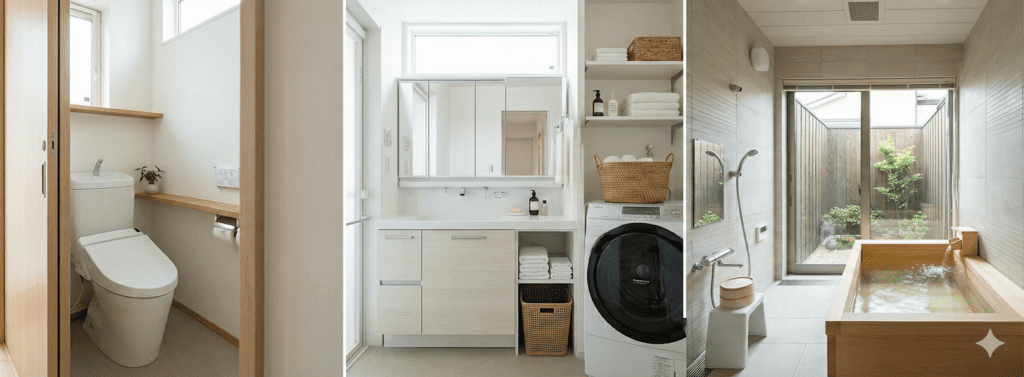
Each space communicates how it should be used. This clarity reduces ambiguity and reinforces comfort, especially around intimate activities. Users know what is expected in each environment, and the design supports those expectations through materials, layout, and fixtures.
This spatial logic also shapes expectations about technology. When a space already signals care and discretion, adding supportive technology feels appropriate rather than invasive. For health-tech designers, this underscores the importance of aligning devices and systems with the psychological role of the space, not just its physical dimensions.
Why the Toilet Became a Site of Precision, Trust, and Preventive Potential
Japan’s leadership in advanced toilet technology stems from incremental, trust-first development, not sudden disruption. Post-WWII investments in sanitation established cleanliness as a public good and health foundation, treating toilets as essential infrastructure.
These fixtures evolved into sites of refinement and comfort. TOTO launched the Washlet in 1980, introducing electronic bidet features like warm-water cleansing, heated seats, and deodorization. Crucially, adoption in hotels, workplaces, and public facilities normalized the technology, reducing psychological barriers and establishing it as standard infrastructure.
This shared experience built trust in the technology and its producers, prioritizing reliability and cleanliness. Because toilets are used daily and privately, they offer a unique, routine environment for passive health sensing. While advanced biometric sensing is emerging, the toilet’s role as a trusted, functional space provides long-term preventive healthcare potential unmatched by other domestic environments.
Case Study: TOTO’s Neorest as Infrastructure-Led Innovation
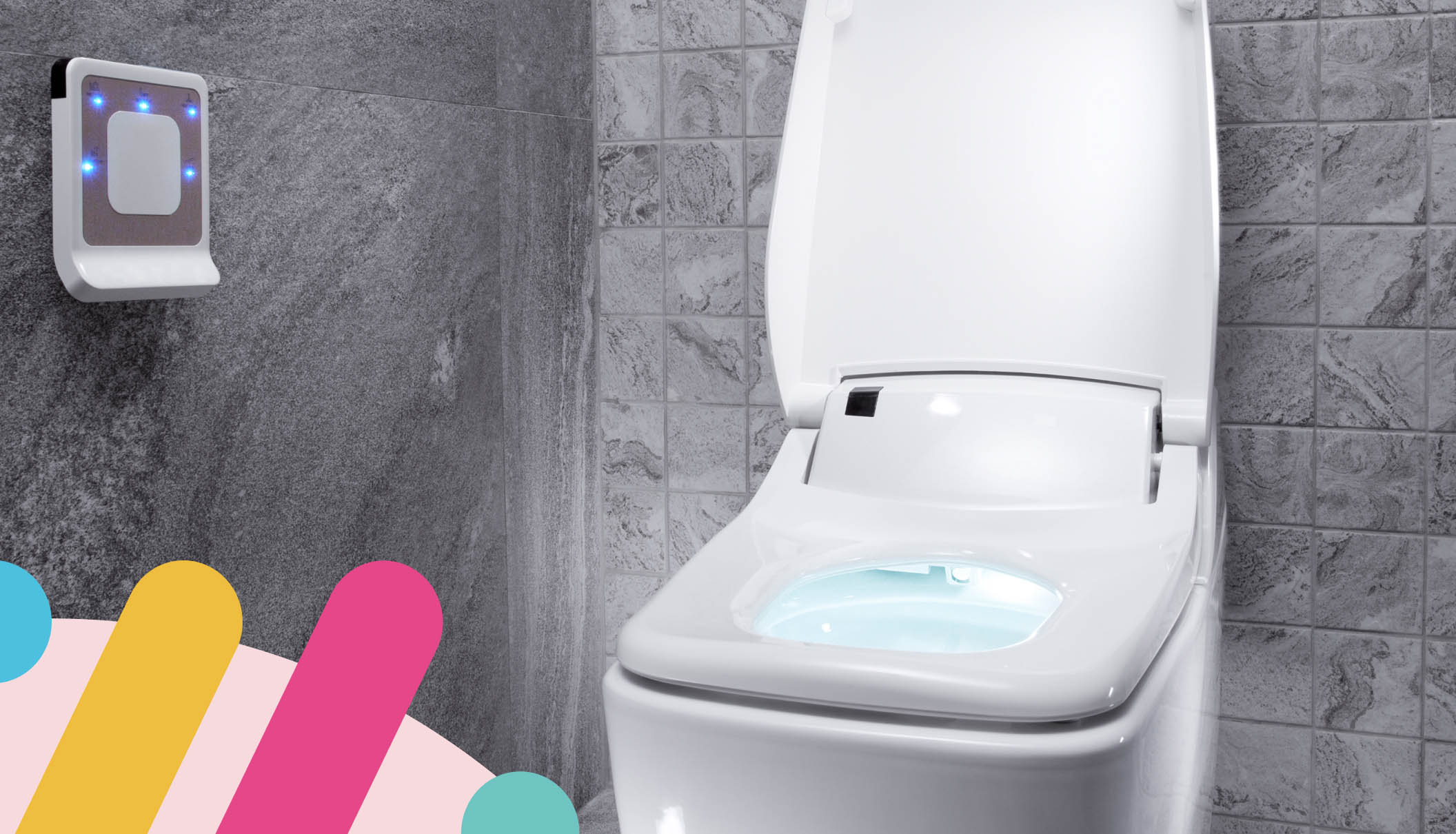
TOTO’s Neorest series illustrates how health-adjacent innovation succeeds when it is embedded into existing routines. The company’s design philosophy emphasizes cleanliness, reliability, and user trust over novelty or technical spectacle. Neorest toilets integrate advanced hygiene functions with refined design while preserving a familiar and predictable user experience, as outlined on TOTO USA’s Neorest product pages.
Key characteristics of this infrastructure-led approach include:
- Health-adjacent features positioned as optional and non-intrusive
- A primary focus on comfort, cleanliness, and reliability
- Design that reinforces existing routines rather than creating new ones
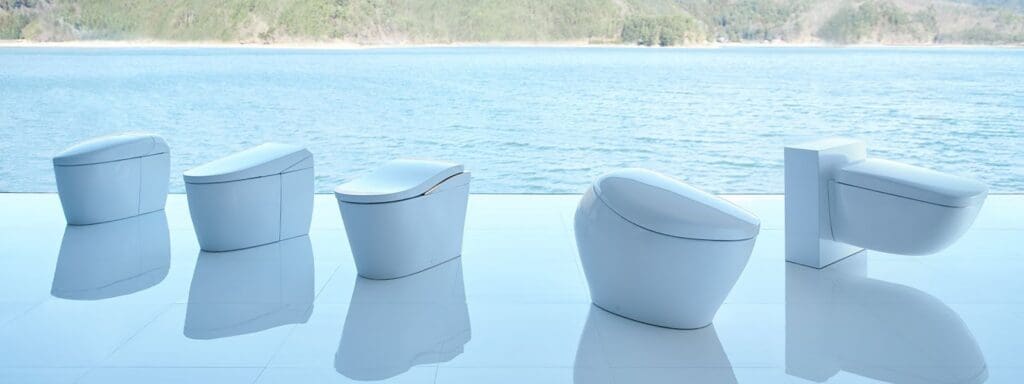
Recent Neorest models introduce optional health-related capabilities, including stool analysis features that allow users to view trends via connected applications. These functions are presented as supplementary rather than central. They do not reposition the toilet as a medical device, and they do not disrupt established routines or expectations.
This approach is deliberate. By framing health insights as incremental and optional, TOTO avoids triggering concerns around privacy, surveillance, or over-medicalization of daily life. Health-related value emerges naturally from everyday use, consistent with Japanese expectations for discretion and control.
The strategic lesson is not about any single feature or sensor. It is about how innovation is introduced and sustained. Infrastructure-led products that respect routine, emphasize trust, and minimize friction are better positioned to support preventive healthcare than standalone devices that require active engagement.
Aging, Prevention, and Everyday Health Maintenance in Japan
Japan’s demographic profile adds urgency to this model. The country has one of the world’s oldest populations, with people aged 65 and over accounting for more than a quarter of residents, according to the Cabinet Office’s annual aging report, published by the Government of Japan Cabinet Office.
An aging population places sustained pressure on healthcare systems, increasing the importance of early detection, continuous monitoring, and everyday maintenance. Preventive care is most effective when it operates continuously and unobtrusively rather than episodically through clinic visits alone.
Cultural norms already support this orientation. Daily hygiene routines, careful maintenance of living spaces, and acceptance of monitoring in appropriate contexts align with broader policy goals around preventive healthcare and independent living for older adults.
Bathroom-based technologies fit naturally within this framework because they operate within established habits and private environments. They allow health-related signals to be captured without adding cognitive or behavioral burden, supporting long-term sustainability rather than short-term engagement.
For international B2B audiences, this highlights a key insight. Preventive healthcare in Japan is designed to blend into everyday life, not stand apart from it or demand constant attention.
What International Health-Tech Companies Can Learn
Japan’s approach offers lessons far beyond toilets or bathrooms. Health technology performs better when it aligns with spatial purpose rather than forcing new behaviors. Trust is built through reliability, discretion, and long-term presence, not rapid feature expansion or aggressive data collection.
For international health-tech companies, several principles stand out:
- Spatial alignment: place technology where care and hygiene are already expected
- Trust-first design: prioritize reliability and discretion over novelty
- Routine integration: support existing habits instead of demanding behavior change
- Psychological comfort: respect privacy, especially in intimate environments
Japan’s compartmentalized approach to sensing and data collection differs from app-centric models by emphasizing context over interface. Successful localization starts with understanding where health belongs within daily life.
Strategic Implications for Market Entry and Partnerships
For companies entering Japan, product design must respect cleanliness expectations, spatial norms, and cultural comfort with monitoring. Solutions that feel intrusive or out of place are likely to face resistance, regardless of technical sophistication.
From a strategic perspective, this has implications across multiple areas:
- Product design: technologies should feel like extensions of existing infrastructure
- Messaging and positioning: emphasize support, reliability, and routine
- Partnership strategy: collaborate with infrastructure-based players such as manufacturers, housing developers, and facility operators
Partnerships with infrastructure-based companies can anchor innovation within trusted ecosystems and accelerate acceptance.
Japan also offers a valuable testbed for infrastructure-led health models that may later be adapted to other markets facing aging populations and rising healthcare costs.
Conclusion: Cleanliness as a Blueprint for Preventive Healthcare
Japan’s evolution from sanitation infrastructure to smart, health-adjacent toilets reveals a broader pattern. Health innovation succeeds when it fits naturally into everyday life and trusted spaces.
Cleanliness functions as an organizing principle that connects design, culture, and preventive care. For international B2B leaders, the lesson is not about smarter toilets. It is about building healthcare systems that people do not have to think about.
For international health, wellness, and health-tech companies evaluating Japan, Pulse Marketing provides strategic guidance grounded in local consumer behavior, infrastructure norms, and market realities. Learn how culturally aligned design, positioning, and partnerships can support successful market entry and long-term adoption by contacting Pulse Marketing.