
Wellness Innovation in Japan Looks Different
The global wellness and wearables market has become increasingly crowded, dominated by fitness trackers, performance metrics, and app-driven optimization. In many Western markets, wellness innovation is framed around tracking, measuring, and improving performance, often requiring constant user engagement, an approach that has led to fatigue, data overload, and declining long-term adoption.
Japan presents a contrasting model. Rather than focusing on dashboards and devices, Japanese wellness innovation is often embedded quietly into everyday life, with clothing, bedding, and workwear designed to support physical wellbeing without requiring active monitoring or behavioral change.
This shift has given rise to what is increasingly described as “recovery wear” (and sometimes “vital wear”), an emerging category of apparel that blends recovery, daily comfort, and preventive healthcare. Far from simply following global wellness trends, Japan is redefining them through garments designed to support everyday wellbeing as part of normal routines.
What Is “Recovery Wear”? Defining the Category in the Japanese Context
Recovery wear occupies a distinct space between medical devices, fitness wearables, and athleisure. Unlike smart wearables, it does not rely on sensors, screens, or data collection. Unlike performance apparel, it is not designed primarily for training or peak athletic output.
In the Japanese context, recovery wear refers to clothing designed to support the body’s baseline functions through fabric science, ergonomic construction, and subtle physiological effects. Rather than optimizing performance, these garments aim to make everyday life more comfortable and sustainable by reducing strain and supporting natural bodily rhythms.
At a practical level, recovery wear typically focuses on several core forms of support:
- Recovery support, helping the body relax and restore itself during sleep or rest periods
- Circulation assistance, using fabric structure or compression to encourage healthy blood flow
- Posture and alignment, reducing fatigue caused by long hours of sitting, standing, or repetitive movement
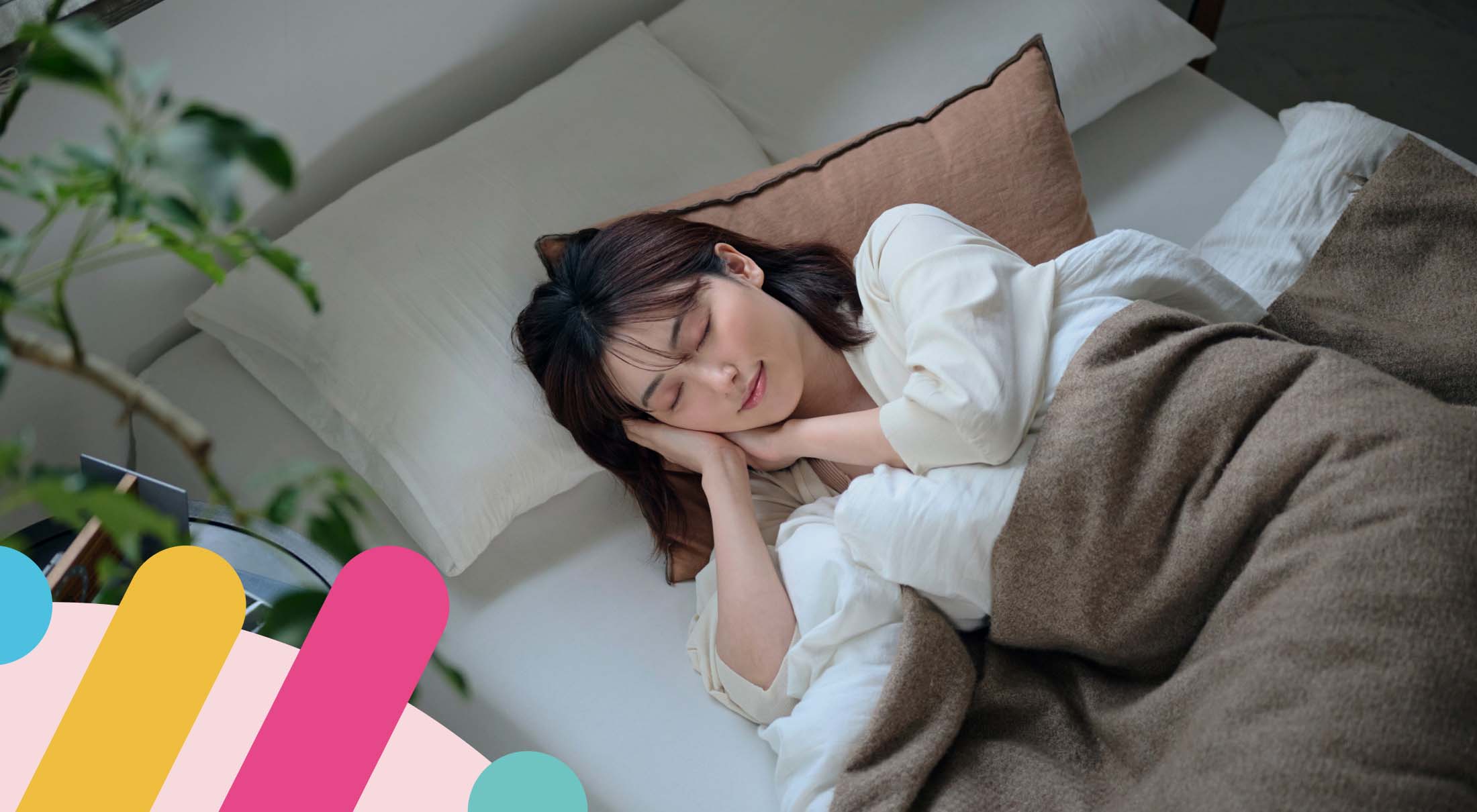
- Sleep quality, improving comfort and thermal balance during rest
- Daily physical comfort, minimizing friction, pressure, and muscular strain throughout routine activities
A defining characteristic of recovery wear is its non-intrusive nature. The health benefit is passive and continuous, requiring no apps, alerts, or interpretation. In this sense, recovery wear represents health you wear rather than health you monitor, aligning closely with Japanese expectations around ease, discretion, and long-term habit formation.
Why Japan Is Fertile Ground for Recovery Wear Innovation
Structural and Demographic Factors
Japan’s demographic profile plays a significant role in shaping demand for wellness apparel. With one of the world’s oldest populations, there is strong consumer interest in maintaining mobility, comfort, and quality of life over the long term rather than addressing health issues after they emerge.
Preventive care is deeply normalized within Japan’s healthcare system and social mindset, making consumers receptive to products that reduce physical strain before it becomes injury or illness. Long working hours and daily commuting further contribute to widespread fatigue and musculoskeletal stress, creating demand for wearable support throughout the day.
Cultural and Lifestyle Drivers
Cultural preferences further reinforce the appeal of recovery wear. Japanese consumers tend to value subtlety over overt self-promotion, particularly when it comes to health behaviors, favoring products that quietly improve comfort over those that signal intense fitness or medical intervention.
There is also strong trust in science-informed, incremental improvement. Rather than bold claims or dramatic transformations, consumers respond better to products that promise modest but reliable benefits, positioning recovery wear as a natural extension of everyday life.
Mapping Japan’s Recovery Wear Ecosystem
Japan’s recovery wear ecosystem spans specialized wellness brands and established fashion and workwear companies. Together, these players demonstrate how apparel can support wellbeing across sleep, work, recovery, and daily movement, gradually forming a coherent and scalable category.
Sleep and Recovery Wear
Brands such as TENTIAL, best known for its BAKUNE recovery wear, have helped popularize the idea that sleep itself can be supported through clothing. BAKUNE garments are designed to be worn during rest, positioning sleep as a form of performance recovery not just for athletes, but for everyday consumers managing work-related fatigue.
Similarly, VENEX focuses on recovery wear rooted in rest, circulation, and proprietary fabric technology. These products are marketed as part of nightly routines rather than as medical devices, reinforcing the idea that recovery can be integrated seamlessly into daily life.
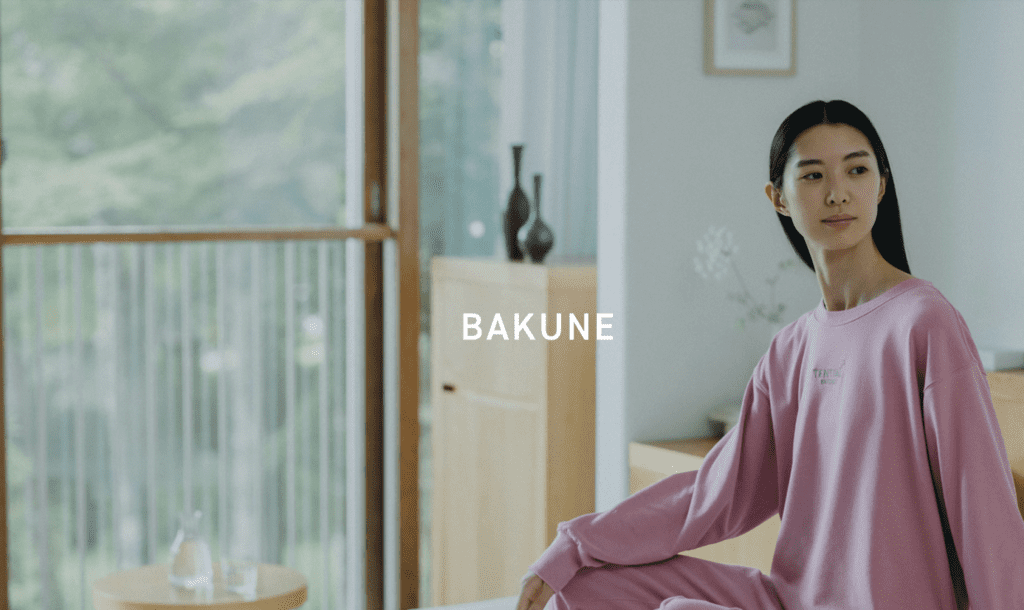
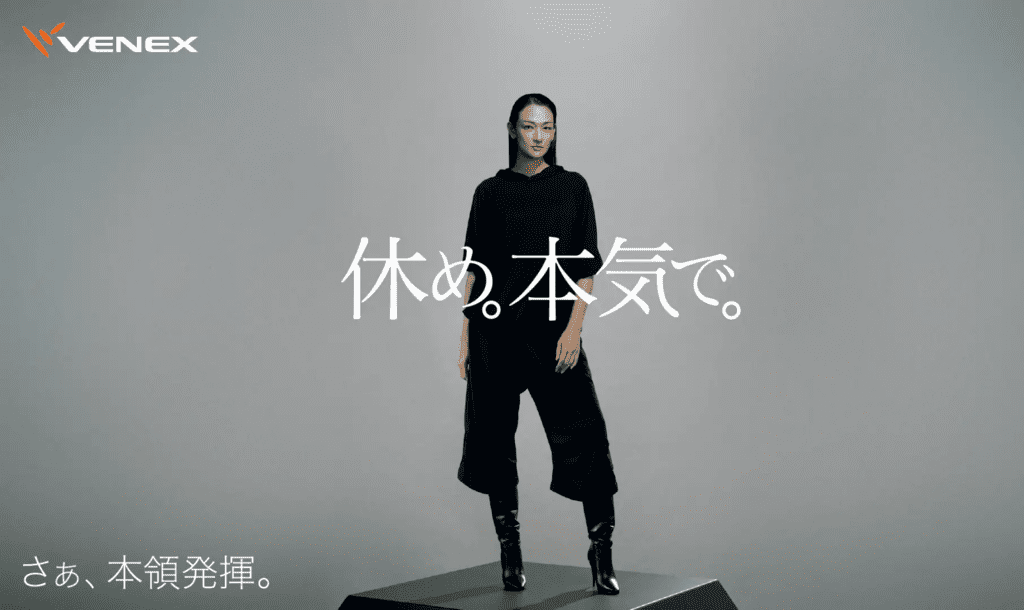
In a society where chronic overwork is widely discussed, sleep-focused apparel resonates because it addresses fatigue in a practical, low-effort way. Recovery wear fits naturally into existing habits, making adoption easier and more sustainable over time.
Circulation, Posture, and Body-Support Apparel
The circulation and body-support segment of recovery wear includes brands such as Colantotte, which integrates magnetic therapy into accessories and apparel that are worn throughout the day. These products cross boundaries between medical, sports, and lifestyle use, reflecting Japan’s flexible approach to wellness categories.
Brands like RED emphasize circulation and body balance as part of daily maintenance, rather than corrective treatment. The focus is on supporting natural bodily function through design and materials rather than through measurement.
Originally known for electrical muscle stimulation (EMS) training devices, SIXPAD has expanded into lifestyle-integrated support wear. This evolution illustrates how performance-oriented brands are adapting to consumer demand for apparel that supports everyday wellbeing rather than isolated training sessions.
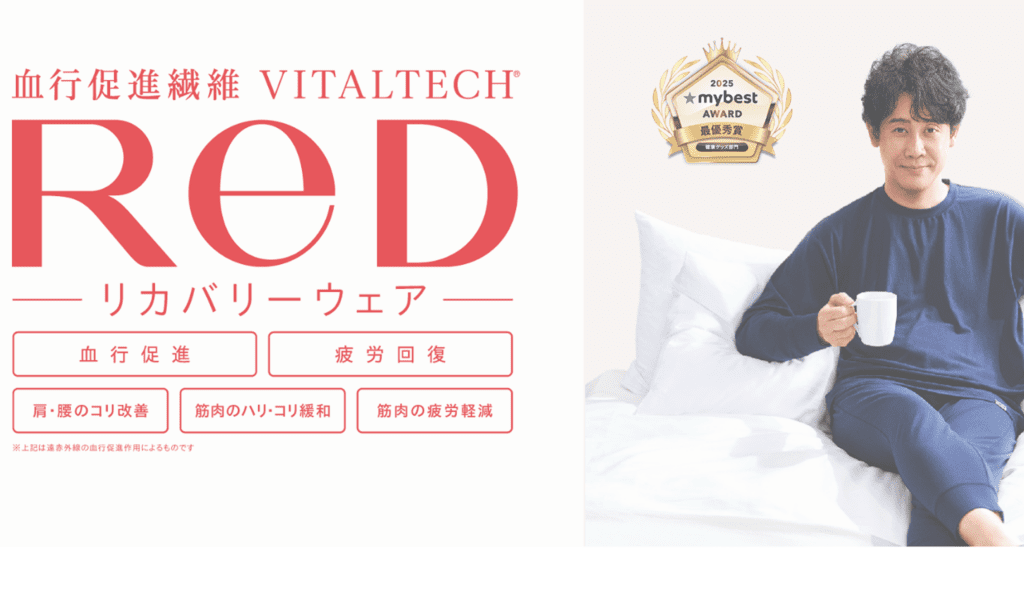
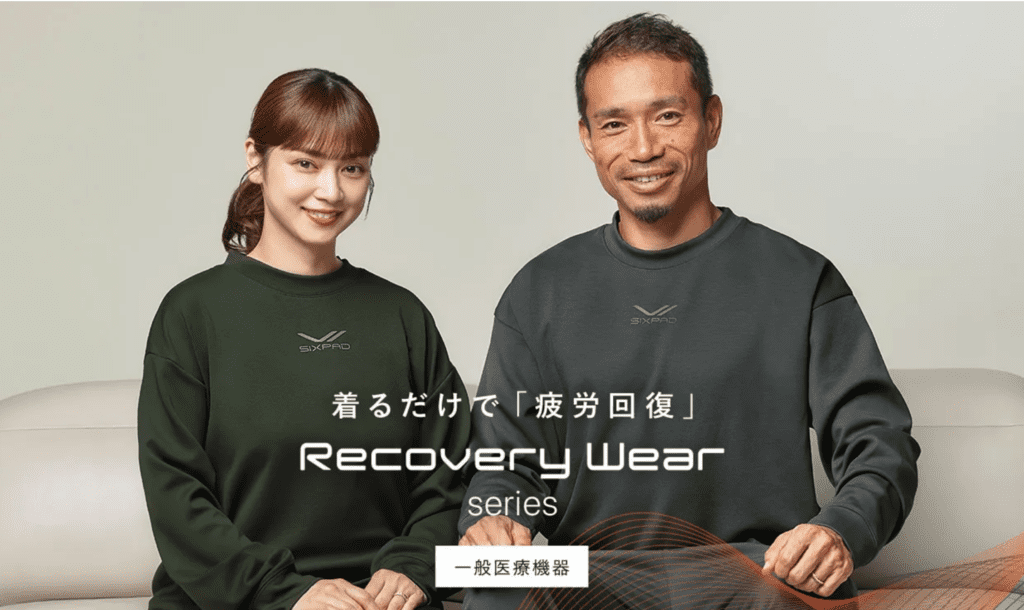
Workwear and Daily-Life Support
Workwear represents one of the clearest examples of how recovery wear integrates wellness into routine behavior. RELIVE develops apparel designed to address fatigue, mobility, and physical strain among working populations, particularly those engaged in physically demanding roles.
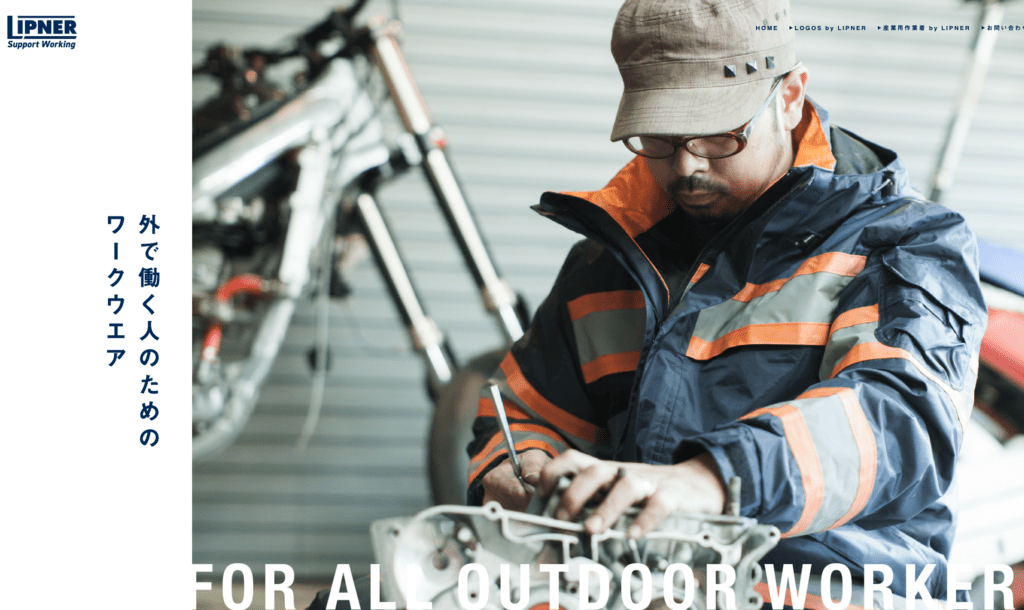
Brands such as LIPNER and similar functional wear labels focus on long hours, repetitive movement, and commuting conditions. In these cases, the line between workwear, wellness, and recovery becomes increasingly blurred, positioning clothing as a form of daily physical support rather than mere protection or uniform.
Fashion and Lifestyle Brands Entering Wellness
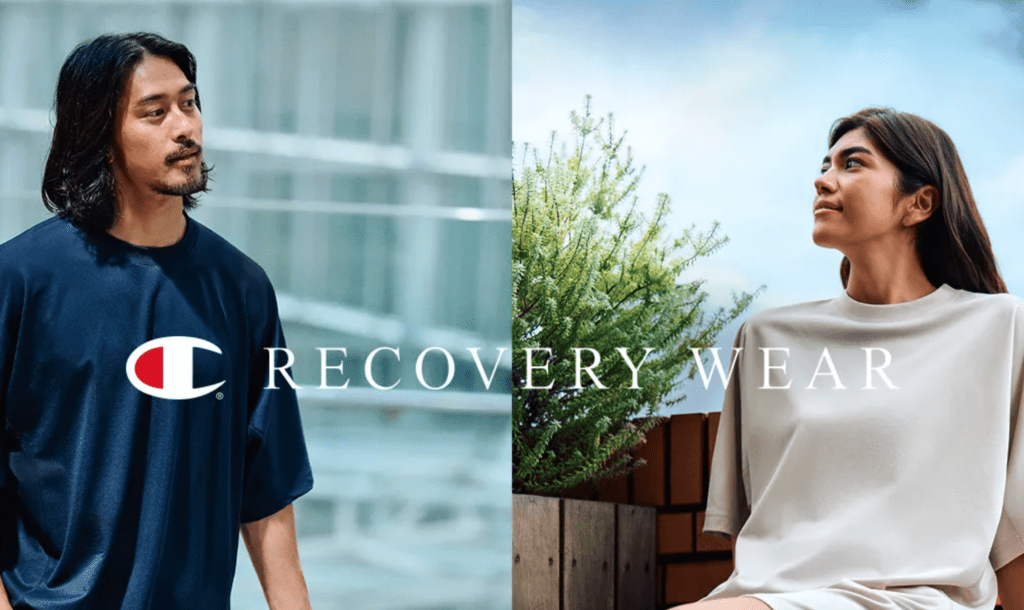
Mainstream fashion and lifestyle brands have played a key role in legitimizing and scaling recovery wear. Champion has adapted its performance heritage toward comfort and recovery-oriented products that suit everyday use rather than athletic competition.
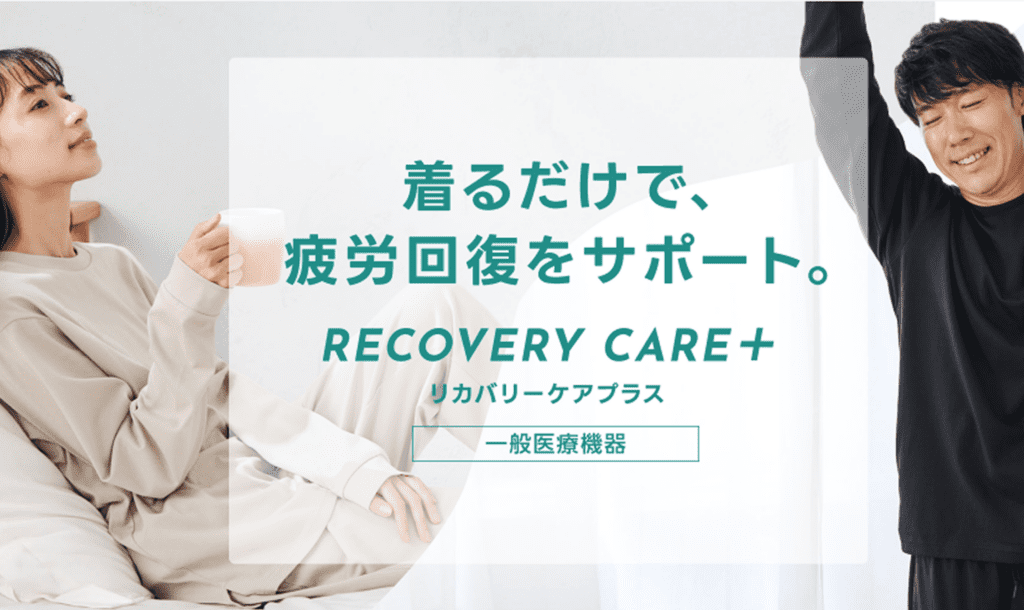
AOKI, traditionally associated with business attire, has reimagined office wear to incorporate comfort, posture support, and fatigue reduction. This reflects growing awareness that long hours of desk work and commuting require apparel designed with physical wellbeing in mind.
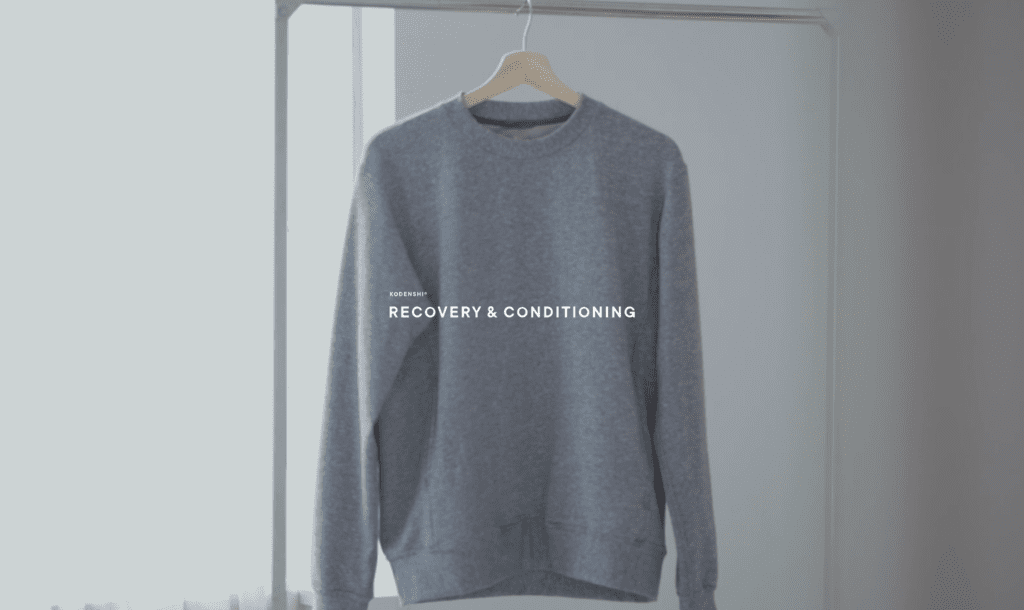
Goldwin, through its C3fit line, blends technical apparel expertise with wellness-oriented features. The result is clothing that meets everyday needs while retaining performance credibility, further normalizing wellness-focused design within mainstream wardrobes.
Cultural Insights: Why Recovery Wear Fits Japanese Consumer Values
Recovery wear aligns closely with how Japanese consumers define self-care. Comfort is widely understood as a legitimate component of wellbeing rather than an indulgence, particularly in the context of demanding work and urban lifestyles.
Design subtlety is equally important. Products that avoid overt medical or fitness signaling are easier to incorporate into daily wardrobes and social settings. At the same time, consumers expect high levels of quality, durability, and fabric performance, reinforcing the importance of thoughtful material development.
Perhaps most importantly, Japanese wellness culture prioritizes habit formation over motivation. Recovery wear succeeds because it works without requiring constant attention, allowing wellbeing benefits to accumulate quietly through everyday use.
Recovery Wear as an Expression of Japan’s Preventive Healthcare Mindset
Japan’s preventive healthcare philosophy emphasizes reducing strain before injury and supporting the body before illness emerges. Recovery wear reflects this mindset by positioning apparel as a daily intervention rather than a reactive solution.
By supporting posture, circulation, and recovery through routine wear, these garments contribute to long-term physical resilience. In this sense, clothing becomes part of the healthcare ecosystem, offering subtle but continuous support that aligns with broader goals of sustaining health and reducing long-term healthcare burden.
What Global Brands Can Learn from Japan’s Approach
Japan’s recovery wear ecosystem highlights the limits of data-heavy, app-centric wellness models. While technology-driven solutions can be powerful, they do not always scale culturally or sustain long-term engagement.
Japanese brands demonstrate the value of designing for everyday life rather than peak performance, prioritizing comfort, durability, and discretion. Communication also plays a critical role, with successful brands emphasizing credibility and lived experience instead of hype or disruption. For global brands, Japan offers a valuable testing ground for wellness concepts that may define future norms beyond device-led models.
Strategic Takeaways for Brands Entering Japan or Expanding into Wellness Apparel
For brands considering Japan or adjacent wellness categories, success depends less on novelty and more on how well products align with everyday realities. Recovery wear in Japan demonstrates that trust is earned through consistency, restraint, and a deep understanding of how people actually live and work.
Several strategic principles consistently emerge from successful players in this space:
- Design for daily life, not peak moments. Products should support long hours, commuting, sleep, and routine movement rather than short bursts of athletic performance.
- Prioritize fabric science and construction. Material performance, breathability, durability, and tactile comfort often matter more than visible features or technology.
- Deliver benefits passively. The most successful recovery wear products work without requiring apps, behavior change, or ongoing user attention.
- Avoid aggressive health claims. Modest, clearly explained benefits tend to resonate more than bold or medicalized promises.
- Build credibility through explanation, not hype. Clear communication about materials, design intent, and use cases outperforms disruptive or sensational messaging.
- Embrace subtle branding and aesthetics. Products that blend into everyday wardrobes are more likely to see sustained use.
- Think beyond fitness and healthcare channels. Retail, workwear, and lifestyle environments are key wellness touchpoints in Japan.
- Leverage trusted local partnerships. Collaboration with established domestic brands can accelerate trust, distribution, and cultural alignment.
Taken together, these principles highlight that entering Japan’s wellness apparel market is as much about cultural fluency as product innovation. Brands that respect local expectations around comfort, discretion, and long-term value are better positioned to build relevance and longevity in this evolving category.
Conclusion: The Future of Wellness May Be Worn, Not Tracked
Japan’s recovery wear movement reflects a deeper shift in how people think about health. Rather than relying solely on dashboards, metrics, and notifications, wellness is increasingly being embedded into the objects people use every day.
Recovery wear offers a glimpse into a future where preventive health is quiet, consistent, and wearable. For global brands and innovators, Japan’s approach suggests that some of the most powerful health technologies of the future may be invisible, woven directly into the fabric of daily life. For brands exploring Japan’s health and wellness landscape, understanding how culture, product design, and consumer expectations intersect is critical. Agencies with on-the-ground market experience, such as Pulse Marketing, help international and domestic brands translate these insights into effective go-to-market strategies tailored to Japan’s unique environment.